


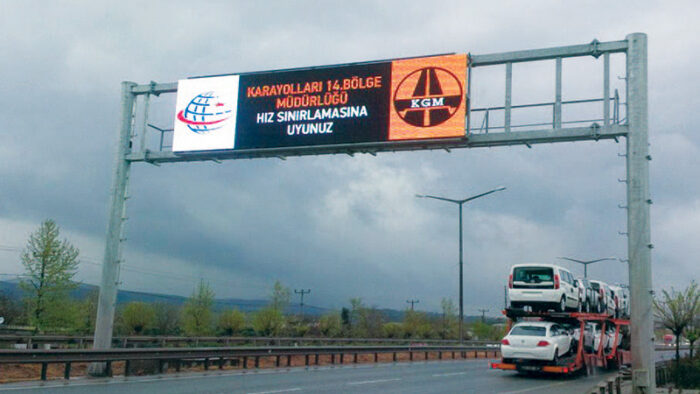
LED display technology has begun to be used when monitors and projectors fail to provide the desired image outdoors, especially in daylight. The primary reason for this widespread adoption is their high luminous efficiency and longer lifespan compared to traditional visual displays. Another advantage of LED displays is their high efficiency when controlled by the light source. Because LEDs are preferred outdoors, they don't have a protective coating like glass, preventing reflection and reducing visibility. Traffic information LED displays are preferred primarily for use on highways and overpasses, providing drivers with synchronized, remote traffic management systems to communicate road conditions and traffic information.
Traffic signs have been used in urban traffic since the very beginning. These signs are crucial for informing drivers and pedestrians. Today, these signs are found everywhere in traffic. With the increasing congestion in city traffic and the consequent increase in vehicle numbers, signs have become increasingly invisible to drivers. To address this issue, traffic signs are increasingly illuminated. This is where traffic information LED displays come into play.
LED displays are more clearly visible than conventional signs, both day and night. Traffic information LED displays are known for their impact resistance and weather resistance. They attract drivers' attention in both bright and dark conditions, making them an ideal alternative to overlooked signs. For this reason, traffic information LED displays are now preferred over conventional traffic signs. You can find the most durable and high-resolution signs through Fenova LED Technologies.
Traffic information LED displays come in a variety of styles, including VMS information displays, radar displays, speed limit displays, and traffic warning displays. VMS information displays are crucial because they are placed at designated locations both within and outside the city limits and are used for informational messages, warning drivers about weather conditions, and providing information about road conditions. Traffic information LED displays can be manufactured with or without lighting, or with different exterior casings, depending on the location. Traffic information LED display prices vary depending on the model chosen. LED displays offer a wide range of products based on different pixel pitches. They can be manufactured to any desired size. Radar displays allow users to display speed limits, display measured vehicle speeds, and display traffic signs. Camera systems also record limit exceedances and transmit them via GPS to the relevant authorities. They are manufactured to the desired size, and the price of traffic information LED displays varies directly with their size. Traffic LED displays provide drivers with GPS information about compliance with traffic rules or whether the road is rainy or slippery.